
Sunscreen Myths and Facts - What Actually Protects You
UV safety month is an important reminder that sunscreen plays a key role in protecting your skin from harmful ultraviolet exposure.
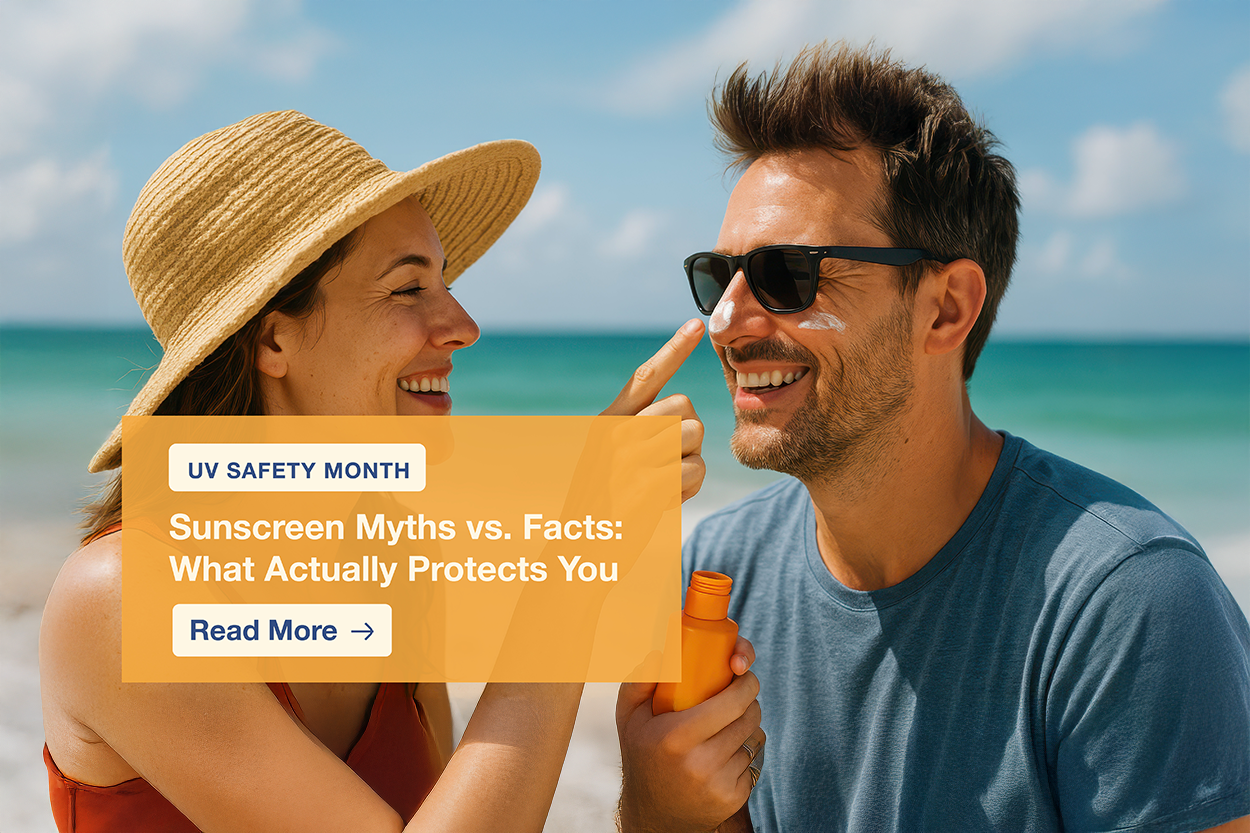
UV safety month is an important reminder that sunscreen plays a key role in protecting your skin from harmful ultraviolet exposure. While many people use sunscreen, there are still common misconceptions about how it works and what actually provides effective protection.
Understanding the facts about sunscreen can help reduce the risk of skin damage and skin cancer. According to the Skin Cancer Foundation, daily use of sunscreen can significantly lower the risk of developing skin cancer.
Why Sunscreen Matters
Ultraviolet (UV) radiation from the sun can damage the DNA in skin cells, which may lead to premature aging and increase the risk of skin cancer. Both UVA and UVB rays contribute to skin damage.
-
UVA rays penetrate deeper into the skin and contribute to aging and long-term damage
-
UVB rays are primarily responsible for sunburn and play a significant role in the development of skin cancer
Using sunscreen consistently helps protect the skin from both types of UV radiation.
Common Sunscreen Myths and the Facts
Myth: You Only Need Sunscreen on Sunny Days
Fact: UV rays can penetrate clouds, meaning skin damage can occur even on overcast days. Sunscreen should be used daily, regardless of the weather.
Myth: Higher SPF Means You Do Not Need to Reapply
Fact: While higher SPF offers more protection, no sunscreen lasts all day. Sunscreen should be reapplied every two hours and after swimming and sweating.
Myth: One Application in the Morning Is Enough
Fact: Sunscreen wears off throughout the day. Reapplication is essential to maintain protection.
Myth: People with Darker Skin Do Not Need Sunscreen
Fact: Skin cancer can affect individuals of all skin tones. While melanin offers some natural protection, it does not eliminate risk.
Myth: Makeup with SPF Provides Enough Protection
Fact: Most people do not apply enough makeup to achieve full SPF protection. Dedicated sunscreen is still recommended.
What Actually Protects You Skin
Sunscreen is most effective when used as part of a broader sun protection strategy. To protect your skin:
-
Use a broad-spectrum sunscreen that protects against both UVA and UVB rays
-
Choose an SPF of 30 or higher
-
Apply sunscreen generously to all exposed skin
-
Reapply every two hours or after water exposure
-
Seek shade during peak sun hours between 10 a.m. and 4 p.m.
-
Wear protective clothing, hats, and sunglasses
These steps work together to reduce UV exposure and protect your skin over time.
Special Considerations During Cancer Treatment
Some cancer treatments can make the skin more sensitive to sunlight. Patients undergoing chemotherapy, radiation therapy, or certain targeted therapies may be more prone to sunburn or skin irritation.
If you are receiving treatment, talk with your care team about specific sun protection recommendations, including sunscreen types and additional protective measures.
Protecting Your Skin Year Round
UV exposure is not limited to summer months. Protecting your skin should be part of your daily routine throughout the year.
UV Safety Month is a reminder that small, consistent habits such as applying sunscreen and limiting sun exposure can help reduce long-term skin damage and support overall health.
Request an Appointment
Schedule your visit with our care team
Choose the option below. Existing patients can access the secure portal, and new patients can call our team to get started.
Existing Patient
Sign in to your patient portal to request, confirm, or manage an appointment.
Open Patient PortalNew Patient
Call our scheduling team to book your first appointment and receive next-step guidance.
Call: (918) 505-3200Explore Our Care
Discover services, specialists, and research
Learn more about the comprehensive cancer care available at OCSRI — from expert providers and convenient locations to advanced treatment services and ongoing clinical research.